
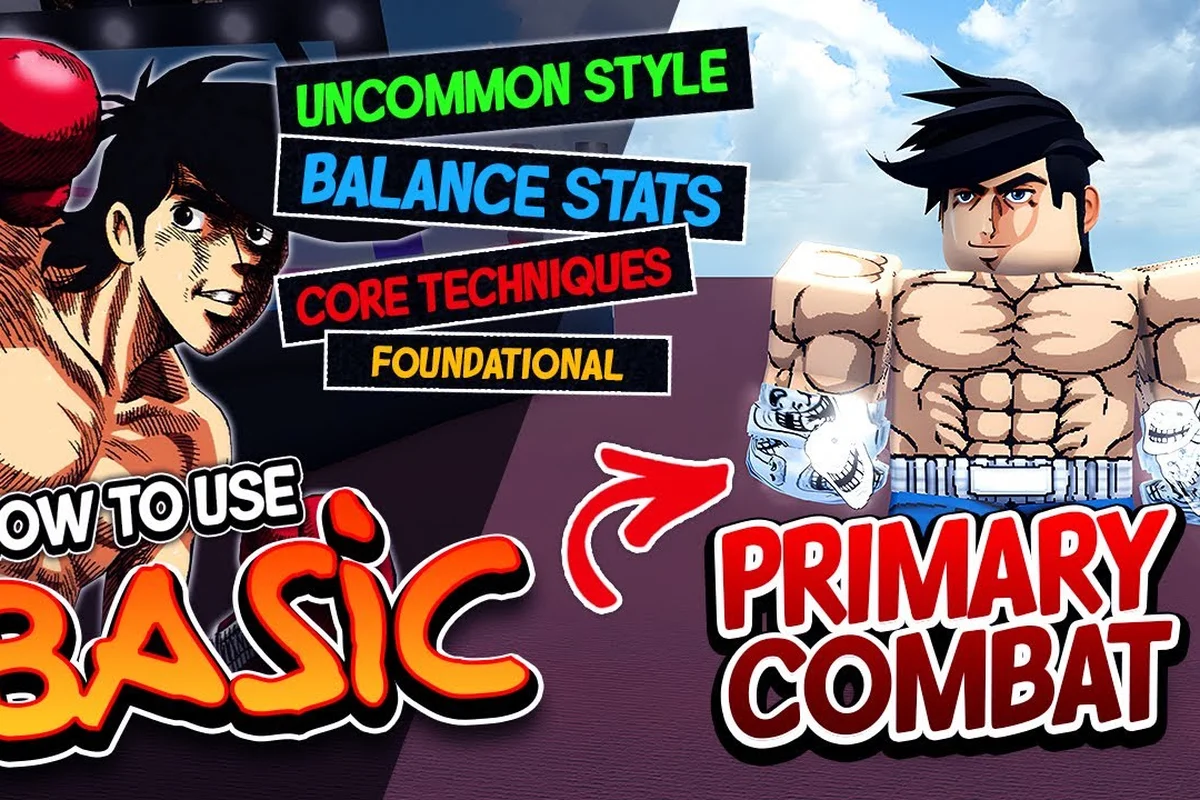
Picking the wrong fighting style in Untitled Boxing Game is the single fastest way to burn through 20 hours of progress without ever leaving the Bronze rank. The right early-game style forgives missed inputs, teaches clean fundamentals, and still scales into the upper ranks once you've built real match sense. This guide breaks down the Untitled Boxing Game best style for beginners, the common errors that keep new players stuck, and a structured practice loop you can run in 20-minute sessions.
According to the Untitled Boxing Game Wiki, beginner-friendly styles typically emphasize balanced stats and forgiving hitboxes, making them ideal for players still learning the game's rhythm-based defense and stamina mechanics.
What Makes a Style Beginner-Friendly in Untitled Boxing Game
Not every flashy style is good starter material. The beginner-friendly picks share four traits: simple M1/M2 chains, forgiving hitboxes, low cooldown on the gap-closer, and clear visual telegraphing so you can read both your own pressure windows and your opponent's punish windows. Community tier lists consistently rate Basic and Smash as F-tier for climbing because their ceilings cap out, but that rating measures ranked viability, not learning value. For someone with under 50 hours in the game, those same styles are genuinely the cleanest teachers of the core game.
The styles that show up at the top of creator tier lists — White Ash (Ashes to Ashes) and Ghost (Ghost Jab Barrage) — are S-tier precisely because they have high-skill ceilings and oppressive M2 pressure. That's the opposite of what a new player needs. Reaching that ceiling requires reading whiff punishes, frame-perfect M2 cancels, and tracking cooldowns across extended exchanges. Put bluntly: learning Ghost before you can consistently land a four-piece M1 chain is like learning a drift car before you have a license.
The Four Traits to Check Before You Commit
Every style in the game can be filtered through the same beginner lens. Use this quick table to evaluate any style you unlock:
| Trait | Beginner-Friendly Value | Why It Matters |
|---|---|---|
| M1 chain length | 3–4 hits | Longer chains punish dropped inputs harder |
| M2 windup | Short (under 0.4s) | Long windups get interrupted before they land |
| Gap-closer cooldown | Under 6s | Long cooldowns leave you stranded at mid-range |
| Visual telegraph | Clear, distinct | You can read your own tells and bait punishes |
If a style fails two or more of these checks, leave it equipped for ranked and treat it as a lab style only. Your ranked slot should be the style that passes all four.
The Three Best Starter Styles Ranked
| Style | M2 Damage Profile | Best Taught Skill | Ranked Ceiling | Learning Priority |
|---|---|---|---|---|
| Basic | Neutral baseline | Neutral game + spacing | F-tier (cap-out) | 1st style to learn |
| Smash | High single-hit | Punish timing + whiff reads | F-tier (cap-out) | 2nd style to learn |
| Slugger | ~10.5% max HP per M2 | Trade math + break-point tracking | A-tier (still viable) | 3rd style to learn |
Basic should be your first 10-hour style. It has no gimmicks, no transformation states, and a fully predictable M1-to-M2-to-M1 loop. You will lose to experienced players who mix in dash cancels, but you will learn the muscle memory that every other style inherits. Think of Basic as the dojo.
Smash is the natural second style. Its M2 hits noticeably harder than Basic's, and the hitstun is longer, which gives you a real punish window after a successful read. The downside is that Smash's recovery is sluggish, so missing an M2 against a Ghost user means eating a full Ghost Jab Barrage combo to the face. Smash teaches you the lesson every competitive player eventually learns: punishes only work if your read is right.
Slugger is where the training wheels come off but the style still stays accessible. A single landed M2 from Slugger deals roughly 10.5% of maximum HP according to community-tested data, which means three clean M2s in a round is a guaranteed knockdown on most opponents. Slugger's gap-closer has a moderate cooldown, but its M1 chain is short enough that even sloppy inputs land cleanly. Once you're comfortable landing M2s on reaction, transition your ranked slot to Slugger and start climbing for real.
Why You Should Skip the Mythics Early
It's tempting to chase the White Ash or Ghost styles because every tier list crowns them S-tier. Save that chase for after you've banked 100+ ranked wins with Slugger. The mechanics that make White Ash dominant — extended M2 chains, transformation cancels, and frame-perfect punishes — assume you already understand spacing, recovery frames, and cooldown tracking. None of those skills are intuitive; all of them are learnable, but only if you've already drilled them on a forgiving style first. More details on the meta styles and their matchup spreads are covered in the meta styles tier list, which is worth bookmarking for the day you graduate off Slugger.
Beginner Mistakes That Keep You Stuck in Bronze
The rank ladder in Untitled Boxing Game runs through clear RT bands: Bronze (1,000–5,000 RT), Silver (6,000–10,000 RT), Gold (11,000–16,000 RT), Diamond (16,500–21,000 RT), and Champion (21,500–25,000 RT). The gap between Bronze and Silver is wider than any other band on the ladder, and almost everyone who fails to clear it is making one of the same five mistakes.
| Mistake | Why It Loses Rounds | Quick Fix |
|---|---|---|
| Mashing M1 after a blocked string | Drops your turn, opponent punishes for free | Reset to neutral after a block |
| Holding forward with no dash cancel | Walks into M2 range, eats a combo | Tap dash back instead of holding back |
| Whiffing M2 from max range | Long recovery, free punish window | Only commit M2 inside your effective range |
| Not tracking M2 cooldown | Mashes a style on cooldown, gets jammed | Watch the cooldown ring before re-engaging |
| Tunnel vision on the knockdown | Overcommits to a 2H, gets M1 interrupted | Confirm the knockdown read with a dash first |
These five errors account for the majority of Bronze-round losses reported by community playtests. The good news is that all five are mechanical, not strategic — you don't need to rethink your game plan, you just need to install one habit at a time.
The Mashing Trap
The single most common error is the mashing habit. New players see a blocked string and panic-mash M1 to "keep the pressure on." In a real match, blocked M1s are the opponent's turn by default. If you mash four M1s into a block, you've handed them four free punish windows. The fix is brutal but simple: after your M1 is blocked, return to neutral. Neutral means no buttons held, dash ready, both feet planted. From neutral you can react to what they do, instead of feeding them a pre-loaded combo.
The Overextension Problem
The second most common error is the opposite of mashing: players who hold forward without ever dashing, walk into M2 range, and eat a fully charged punish combo. The dodge input is your friend. Holding back on a stick or keyboard walks you backward slowly; tapping back plus dash slides you out of danger in a single frame. The habit you want to build is dash back after every blocked string, not hold back. The dash back is faster, it doesn't drift, and it lets you re-engage on your own timing.
How to Practice: A 20-Minute Daily Training Loop
Practice without a structure just turns into ranked grinding with extra steps. The training loop below takes 20 minutes, hits every skill you need to climb, and is designed to be run before you queue ranked. You don't need a partner; everything in this loop works against AI sparring or in the free-play lab.
| Block | Time | Drill | Skill Built |
|---|---|---|---|
| Warm-up | 3 min | Free-play dash cancels only | Dash muscle memory |
| M1 chain | 4 min | Land 4-piece M1 chain 10x in a row | Combo consistency |
| M2 punish | 5 min | Whiff an M2, punish AI's whiff 10x | Punish window reading |
| Cooldown tracking | 4 min | Only press M2 when cooldown ring is full | Resource management |
| Live rounds | 4 min | 2 ranked matches, note one mistake per match | Match application |
Run this loop every session for a week and your Bronze-to-Silver gap will close faster than you expect. The first three blocks look boring on paper, which is exactly why they work — boring reps build the autopilot habits that win rounds in the 30th match of a session, not the 1st.
The Punish Lab Drill
The single highest-value drill in this loop is the M2 punish block. Here's the structure: stand at max M2 range from the AI, whiff an M2 on purpose, then immediately punish the AI's whiff punish with a full M1 chain. That's a real round. That's exactly what happens when you whiff an M2 against a competent player. By drilling the recovery in slow motion, you build the reflex to not whiff in the first place. Players who run this drill daily report noticeably cleaner M2 commitment within 5–7 days, according to community training notes.
The Cooldown Ring Check
Slugger's M2 cooldown is the difference between a clean round and a feed round. Most new players mash M2 the moment the button comes off cooldown, regardless of range or stance. The habit you want is the opposite: wait for the opponent's tell, then commit M2 inside your effective range. The cooldown ring tells you when the ability is available; your eyes tell you when it's safe to use. Combine both signals and your M2 hit rate will jump from roughly 40% (mash timing) to closer to 70% (tell-based timing) within a couple of weeks.
How to Beat Better Players Without Their Mechanics
Beating a player who has more hours than you isn't about matching their style. It's about exploiting the gaps in their game. Better players in Silver and Gold are consistent, but they have tells too, and those tells are the same ones you should be learning to hide. The beginner progression guide covers the broader system context, but the specific tactics below are what close the skill gap in a single session.
| Better Player Tendency | How to Punish It | Style That Excels Here |
|---|---|---|
| Dash-cancel after every M1 | Hold neutral, punish the dash-in | Slugger |
| M2 on cooldown to close rounds | Wait out the cooldown, then M1 chain | Basic or Slugger |
| Approach from the same side | Block the approach, M2 cross-counter | Slugger |
| Throw M2 from max range | Stay outside M2 range, whiff-punish | Basic |
The pattern across all four of these punishes is the same: better players are predictable because they rely on the same optimal lines. Once you've seen the line 20 times, the counter becomes obvious. The hard part isn't recognizing the counter; it's trusting the counter when your opponent is staring you down. That's the part practice builds.
The Read-and-Punish Cycle
The cycle that wins rounds at every level of play has three steps: observe, commit, reset. Observe what the opponent did last round. Commit to the counter next round. Reset to neutral after the counter lands, regardless of whether it hit or whiffed. The reset step is what most beginners skip, which is why their "counters" turn into panic feeds after the first successful read. The full loop is observe → commit → reset → observe again. That loop is also the foundation of every higher-level technique in the game, including the Ghost Jab Barrage chains that S-tier Ghost players execute in ranked.
Climbing Out of Bronze for Good
The Bronze-to-Silver transition is the only rank jump in the game that is decided by mechanics alone. Once you're in Silver, opponents start to vary their openers, your reads need to be faster, and pure punish-game starts to lose value. Get to Silver on mechanics first, then add the strategic layer. The tips and tricks guide covers the strategic layer in detail, but the order matters: mechanics first, strategy second. Skipping that order is the most common reason promising players plateau at Silver 3 indefinitely.
Putting It All Together: Your First 50 Hours
The plan below is what the untitled boxing game training guide community consensus recommends for the first 50 hours of play. It maps cleanly onto the practice loop, the style picks, and the mistake list from the sections above. Follow it as written and you'll exit Bronze with a real ranked foundation.
| Hours | Style | Focus | Ranked Goal |
|---|---|---|---|
| 0–10 | Basic | M1 chain + neutral | Reach Bronze 3 |
| 10–25 | Smash | Punish timing + M2 reads | Reach Bronze 1 |
| 25–40 | Slugger | M2 trades + cooldown tracking | Reach Silver 3 |
| 40–50 | Slugger (refined) | Cross-counters + dash cancels | Push Silver 1 |
The 50-hour mark is when most players have enough mechanical depth to start experimenting with the mythic styles. At that point, the style acquisition guide becomes the relevant next read, because chasing Ghost or White Ash without the rotation locked down will burn the same 50 hours a second time.
The Habit Stack
Three habits, installed one at a time, cover 80% of the climb. Habit one: dash back after every blocked string. Habit two: only press M2 inside effective range. Habit three: reset to neutral after every successful punish. Stack these in order — one per week — and you don't need a fourth habit for the first 1,000 ranks. Every other technique in the game is a refinement of these three.
When to Switch Your Ranked Style
The right moment to switch your ranked slot is when you stop learning from it. If you've spent 10 hours on Basic and your win rate has flatlined at 50% with no obvious mistakes to fix, Basic has nothing left to teach you. Move to Smash. The same logic applies at the 25-hour mark with Slugger. Don't switch based on tier lists; switch based on whether your current style is still producing aha moments in training. That's the cleanest signal that you've outgrown the style.
Frequently Asked Questions
What is the best beginner style in Untitled Boxing Game?
Basic is the cleanest starter style because it has no gimmicks and a fully predictable M1-to-M2 loop, which makes it the best tool for learning spacing and neutral. Once you can land a four-piece M1 chain consistently, transition to Slugger for ranked play, since a single landed M2 from Slugger deals roughly 10.5% of maximum HP and three clean M2s guarantee a round.
How do I beat players who have more hours than me?
Don't try to match their style. Focus on the untitled boxing game beginner mistakes they exploit in reverse: they mash on cooldown, you wait for tells; they whiff from max range, you punish from outside; they hold forward, you dash back. The single highest-impact habit is dash-back after every blocked string, which denies them the free punish window they expect.
How should I practice without just grinding ranked?
Run a 20-minute loop: 3 minutes of dash-cancel warm-up, 4 minutes of M1 chain reps, 5 minutes of M2 punish drills, 4 minutes of cooldown-only M2 commits, and 2 ranked matches with a one-mistake note per match. The reps build the autopilot habits that win rounds 20 through 30 of a session, not round 1. This is the core of every working untitled boxing game training guide.
What mistakes keep new players stuck in Bronze?
The five most common are mashing M1 after a blocked string, holding forward instead of dashing back, whiffing M2 from max range, ignoring the cooldown ring, and overcommitting to a knockdown read. Each one is mechanical, not strategic, which means each one is fixable with a single habit swap. Fix the mashing habit first; it produces the most free punishes for your opponents.
How do I know when I'm ready to try a mythic style like Ghost or White Ash?
You're ready when you can land a four-piece M1 chain on reaction, punish an AI whiff M2 with a full string, and maintain a 55%+ win rate over 50 Slugger matches. Before those three benchmarks are met, the mythic kits will cost you ranks rather than earn them. The meta styles tier list breaks down what each mythic requires so you can plan the transition once the benchmarks are green.