
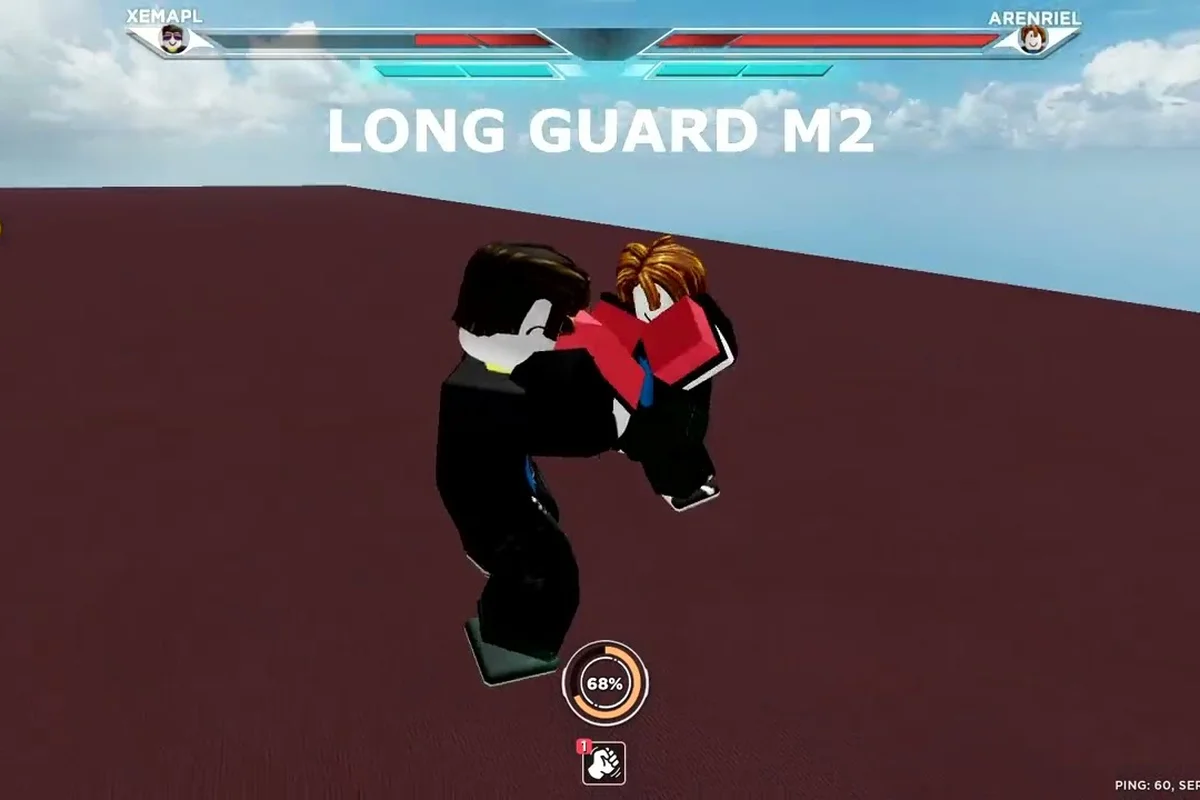
Backdash degradation is the single most punishing mechanic in Untitled Boxing Game once you understand it: every retreat you throw erodes your invincibility frames, and by your third or fourth panic backstep, an opponent who has been tracking your pattern can land a clean counter that ends the round. The difference between players who stall in mid-rank and those who climb past 2000 ELO is almost always how they manage this decay, because once your i-frames disappear mid-dodge, the only thing standing between you and a stun combo is your ability to read the incoming swing. The same system feeds directly into the untitled boxing game ultimate meter, which rewards precise defensive reads and feint baits rather than raw volume of dodges, so mastering the rhythm of backdash degradation is genuinely the gateway to every high-tier ultimate finish available in the current roster.
How Backdash Degradation Actually Works
The backdash in Untitled Boxing Game is technically a two-part motion: a startup window where the boxer shifts their weight back, and a sliding window where they travel away from the opponent. The game grants full invincibility frames during roughly the first 40% of the slide, and the remaining 60% is divided into "degraded" i-frames that only block strikes thrown on specific timing. Each consecutive backdash reduces the total i-frame budget, so the first backdash behaves as the chart says, the second shrinks noticeably, and by the third retreat in a chain you are essentially sliding with a paper-thin defensive shell.
The i-Frame Decay Curve
| Consecutive Backdash | Startup I-Frames | Mid-Slide I-Frames | Late-Slide I-Frames | Practical Feel |
|---|---|---|---|---|
| 1st (fresh) | 8 frames | 6 frames | 4 frames | Fully safe on read |
| 2nd | 7 frames | 5 frames | 2 frames | Punishable on delayed M2 |
| 3rd | 5 frames | 3 frames | 1 frame | Risky vs. committed strings |
| 4th+ | 3 frames | 1 frame | 0 frames | Effectively a free punish window |
| Cancel into block | N/A | N/A | N/A | Resets decay timer if timed early |
The decay timer resets whenever you land a clean hit, successfully block a strike, or perform a parry that connects with the opponent's hurtbox. This is why turtle-style players who never commit to offense eventually find themselves stuck with permanent degradation: the timer is only refreshed by offensive or defensive interactions, not by passive waiting, and the safest reset button is to eat one M1 and immediately swing back rather than chain a fifth consecutive backdash into a guaranteed Perfect Dodge punish. According to community testing reported by player Truffle, the visual difference between the first and fourth backdash can be subtle, which is exactly why mid-rank players keep eating the same counter over and over without understanding why.
Why Degradation Exists in the First Place
Untitled Boxing Game uses the degradation system to enforce the dual counter design philosophy: every successful defensive read should convert into offensive pressure, and runaway backdash chains undermine that loop. By making consecutive retreats mechanically worse, the game forces a decision point after the second or third slide, and the strongest decision is almost always to either commit to an M1 punish or bait a Perfect Dodge that swings the untitled boxing game ultimate meter in your favor. This design also keeps the untitled boxing game ultimate meter from snowballing purely on defensive play, because dodging without ever engaging does not charge the meter fast enough to threaten a finisher.
The Invincibility Frame Timeline Visualized
The cleanest way to internalize untitled boxing game invincibility frames is to think of every backdash as a three-stage timer. The startup stage is where you commit to the retreat, and during the first 8 frames of the slide your character cannot be hit regardless of what the opponent throws. The mid-slide stage is the "real" i-frames, and this is where most players get away with backdashing because opponents have not yet learned to delay their M2. The late-slide stage is where degradation lives, and any opponent who has been watching your retreat timing will hold their M2 for the last 3-4 frames of your slide, which is exactly when degradation has thinned your i-frames to almost nothing.
Stages of a Standard Backdash
| Stage | Frame Range | I-Frame Status | Opponent Punish Window |
|---|---|---|---|
| Startup | 1–6 | Full i-frames | None — too early to punish |
| Early slide | 7–14 | Full i-frames | Punishable only with predictive dash attack |
| Mid slide | 15–20 | Degrading i-frames | Punishable with delayed M1 |
| Late slide | 21–26 | Heavy degradation | Punishable with M1, M2, dash attack |
| Recovery | 27+ | No i-frames | Fully punishable on any contact |
If you want to verify this on your own character, run into training mode, set the bot to M1 only on reaction, and count how many consecutive backdashes it takes before the bot lands a clean hit. According to a community breakdown by Coverzeen, most players register the visual change between backdash two and backdash three, which is the point where the system starts actively punishing passive retreats. Once you can feel that drop, you can start using it as a window rather than a death sentence.
The Dual Counter and How It Connects to Degradation
The untitled boxing game dual counter is the mechanic that makes backdash degradation a feature rather than a punishment. Every time an opponent successfully reads your degraded late-slide and lands a delayed M2, you have a tight window — typically 9 frames — to parry and immediately throw a counter hit that deals bonus damage and pushes the untitled boxing game ultimate meter significantly forward. The system is called "dual" because it is both a defensive parry and an offensive conversion in one input, and it is the highest-value interaction available to a mid-fight player.
Reading When to Dual Counter
| Opponent Behavior | Counter Read | Expected Outcome |
|---|---|---|
| M1 on your backdash startup | Free parry into M2 | Minor meter gain, no risk |
| Delayed M2 catching degraded slide | Dual counter window | Large meter gain, potential combo starter |
| Dash attack into backdash | Free dodge into M1 punish | Resets degradation timer |
| Feint into M1 | Block + immediate M1 | Breaks opponent string, small meter gain |
| Feint into grab | Dodge on read, M2 punish | Heavy damage, full meter segment |
The reason the dual counter is so tightly bound to degradation is that the i-frames need to fail just enough for the opponent to commit, but not so much that you are already stunned. If your backdash is still in the safe first stage, the opponent will not commit and you get no counter. If your backdash is in the fourth or fifth stage with zero i-frames, you eat the hit and enter a combo before you can parry. The sweet spot is almost always the second or third backdash in a chain, when degradation is heavy enough to bait the opponent's delayed M2 but light enough that you still have 1-2 frames of safety to parry. For a deeper breakdown on the input layering that makes this work, the untitled boxing game how to counter guide covers the timing windows in more detail.
Feints as the Offense-Side Counter to Degradation
On the other side of the matchup, untitled boxing game how to feint is the most reliable way to make an opponent's degraded backdash punishable. A standard feint cancels the recovery frames of an M1 or M2 startup, and a well-timed feint against a retreating opponent catches them in the late-slide stage where their i-frames have already thinned. Feints also charge the untitled boxing game ultimate meter on a successful bait, because the game treats a landed feint as offensive pressure even though no damage is dealt, and the meter gains a partial segment every time an opponent visibly reacts to your feint by adjusting their defensive timing.
Feint Timing Windows Against a Backdash
| Feint Timing | Opponent State | Damage on Feint Cancel | Meter Gained |
|---|---|---|---|
| Early feint (startup cancel) | Opponent in mid-slide | Light tap M1 | 8% meter |
| Mid feint (recovery cancel) | Opponent in late-slide | Full M1 + M2 chain | 18% meter |
| Late feint (post-recovery) | Opponent recovering | M1 + combo starter | 12% meter |
| Feint into grab | Opponent in degraded slide | Full grab damage | 22% meter |
| Chain feint (M1 cancel into M2) | Opponent in extended retreat | Two-hit confirm | 15% meter |
The reason feints work so well against degraded backdashes is that the opponent is locked into a recovery animation that they cannot cancel. According to community testing reported on multiple UBG matchup videos, including Zel's perfect dodge showcase, the late-slide stage is exactly the moment opponents try to either commit to another backdash or freeze and block, and both options lose to a properly timed feint. If they commit to another backdash, you feint the M1, hold the M2, and catch them in the degraded late-slide. If they freeze and block, you cancel the M1 into a grab and break their block. The system is punishing by design, and feints are the cleanest punishment available.
Charging the Ultimate Meter Through Smart Defense
The untitled boxing game ultimate meter charges through three primary channels: successful offensive hits, successful defensive reads (including parries, dodges, and Perfect Dodges), and feint baits that force the opponent to visibly adjust. Backdash degradation feeds into this system in two ways. First, the safe early-slide i-frames can be used to bait opponents into committing to a punish that you then parry, which counts as a defensive read and grants a large meter chunk. Second, the degraded late-slide window is where the opponent is most likely to throw a committed M2, and parrying that hit triggers a dual counter conversion that fills roughly 20-25% of the meter on its own.
Meter Gain by Interaction Type
| Interaction | Meter Gained | Risk Level | Notes |
|---|---|---|---|
| Clean M1 hit | 5% | Low | Bread-and-butter gain |
| M1 + M2 confirm | 12% | Medium | Standard combo |
| Parry into counter | 18% | Medium-High | Rewards aggressive reads |
| Dual counter conversion | 22% | High | Best defensive-to-offensive swap |
| Perfect Dodge into punish | 25% | High | Requires i-frame timing mastery |
| Feint bait | 8–15% | Low | Scales with opponent reaction |
| Ultimate landed | N/A | High | Spends the meter for a finisher |
The reason this matters for backdash degradation is that the safest meter farming happens when you let your backdash degrade just enough to bait the dual counter, and then immediately convert that counter into a follow-up combo. Players who try to farm meter by chaining safe backdashes forever will not gain meaningful meter, because passive backdashing without ever being hit or parrying is treated as neutral motion and does not charge the gauge. According to a community overview of the untitled boxing game ultimates list compiled by ChillinwChris, the highest-performing ultimates are almost always the ones earned through a chain of dual counters rather than raw combo volume, because the dual counter fills the meter faster and the resulting finisher often starts from a position where the opponent is already mid-recovery and cannot react.
The Ultimates List and How It Ties Into This Whole System
The untitled boxing game ultimates list is, at the time of writing, a roster of roughly 14 unique finishers, each gated behind either a specific style or a meter threshold. Every ultimate in the list can technically be charged through pure combo volume, but the highest-skill ultimates (the ones with the longest animations and the most damage) are essentially only accessible to players who have mastered the backdash-to-dual-counter loop. This is because the meter charges fastest through defensive reads, and defensive reads require the opponent to commit, and the opponent only commits when your backdash has degraded enough that they believe they have a real opening.
Sample Ultimate Roster and Their Trigger Conditions
| Ultimate | Style Gate | Meter Cost | Optimal Trigger Setup |
|---|---|---|---|
| Spirit Shackle | Spectre | 100% | Parry into Perfect Dodge chain |
| Fissure Strike | Brawler | 100% | M1 + M2 confirm after dual counter |
| Voidstep Execution | Phantom | 100% | Feint bait into M2 on degraded slide |
| Crimson Lariat | Bruiser | 100% | Stamina break into punish chain |
| Empyrean Drop | Aerial | 100% | Dash attack into Perfect Dodge |
| Undertow Slam | Counter | 100% | Parry opponent ultimate attempt |
For the full list of ultimates, the style abilities and ultimates breakdown covers which styles gate which finishers and which meter thresholds are the most common breakpoints. The short version is that every ultimate in the list benefits from being triggered immediately after a dual counter, because the meter is most full at exactly that moment and the opponent is in the worst position to react.
Putting It All Together: A Practical Defensive Loop
The defensive loop that most high-rank players use looks roughly like this. You open with a single backdash to read the opponent's offense, which gives you full i-frames and a safe retreat. If the opponent does not commit, you follow up with an M1 to reset the decay timer. If the opponent does commit, you parry into a dual counter, which charges a meaningful chunk of the ultimate meter and starts a combo. After the combo, you do not chain another backdash immediately — you block, feint, or dash in to maintain offensive pressure until you have confirmed damage. The loop only returns to backdashing when the opponent has generated enough space to throw a committed string, at which point you reset the entire cycle with a fresh first-stage backdash.
This loop only works if you respect the degradation curve. Players who try to shortcut it by chaining backdashes are almost always the ones who complain that the system is broken, when in reality the system is doing exactly what it was designed to do: punish passive play and reward players who convert every defensive read into a meaningful offensive interaction. The untitled boxing game ultimate meter, the dual counter window, the feint timing, and the i-frame decay curve are all separate systems that interlock into a single feedback loop, and the only way to consistently charge ultimates at high speed is to manage every piece of the loop in sequence rather than optimizing one knob in isolation.
Frequently Asked Questions
What is backdash degradation in Untitled Boxing Game?
Backdash degradation is the system that reduces your invincibility frames with each consecutive backdash. The first retreat grants the full i-frame budget, but every additional backdash in the same chain shrinks the safe window, and by the fourth or fifth slide you are effectively dodging without any defensive shell. The system is designed to punish passive retreating and force players to convert defensive reads into offensive pressure through the dual counter mechanic.
How do invincibility frames connect to the dual counter?
Invincibility frames are what make the dual counter possible. When your backdash degrades enough that the opponent commits to a delayed M2, you still have 1-2 frames of i-frames left to parry the swing, and that parry triggers the dual counter conversion. Without degradation, the opponent would never commit, and without the residual i-frames, you would be stunned before you could parry. The system is calibrated so that the second and third backdash in a chain sit exactly at the threshold where dual counters become possible.
What is the best way to feint against a degrading opponent?
The cleanest feint timing against an opponent who is chain-backdashing is the mid-stage feint cancel, which catches them in the late-slide window where their i-frames have thinned. Cancel the M1 startup into a held M2, and the opponent will either commit to another backdash (which your M2 punishes) or freeze and block (which lets you grab). Feints also charge the untitled boxing game ultimate meter on a successful bait, so the move pays off twice in a single interaction.
How fast does the ultimate meter fill on defensive reads?
The meter fills fastest on dual counter conversions, which grant roughly 22% per successful read. Perfect Dodge chains can push 25% per dodge, but they require tighter timing. Pure combo volume is much slower, typically 5% per clean M1 and 12% per M1 + M2 confirm, which is why high-rank players prioritize defensive reads over raw aggression when the meter is close to full.
Does backdash degradation reset on hit, block, or parry?
Yes. The decay timer fully resets whenever you land a clean hit, successfully block a strike, or parry an incoming attack. The timer does not reset on passive waiting, which is why turtle players end up stuck in permanent degradation. The fastest way to refresh your i-frame budget mid-fight is to bait one punish and immediately parry it, because the parry counts as both a defensive reset and a meter charge in a single input.